Our Tried-and-Tested Guide to Paw Protection for Adventure Pets
We often assume our pets are naturally built for anything they may face outdoors. After all, their ancestors thrived outside, right?
The truth is that outdoor adventures introduce some potential risks to your pet’s paws.
Through years of exploring with our dogs and cats, we’ve learned that paw protection isn’t just a luxury; it’s an essential consideration.
This is both to prevent injuries and to ensure our pets are comfortable.
In this guide, we’re sharing our firsthand experience navigating the outdoors with our furry travel buddies, including specific risks and the trusted gear we use to keep our dogs and cats moving safely and responsibly year-round.
Some items in this post were provided to us by the brand for consideration, but the opinions shared are our own. This post contains affiliate links, which means if you click and buy, we will make a commission (at no cost to you). See my full disclosure policy for more details.
Summer Risks
When talking about paw protection, harsh winter conditions often come to mind. However, summer carries its own unique risks that can be just as damaging.
Heat
The most immediate threat is the surface temperatures.
On a hot July afternoon, pavement, sand, and even the exposed stone of the Canadian Shield can reach temperatures that can cause second-degree burns to delicate paw pads in minutes.
We use the “seven-second” rule: if the ground is too hot to hold the back of your hand against it for seven seconds, it’s too hot for your pet’s bare paws.
Rough Terrain
Beyond the heat, the terrain itself can be a risk.
Many of our favourite hiking trails involve rough rock surfaces that can act like sandpaper on their paws over long distances.
Additionally, sharp rocks can lead to painful cuts and scrapes.
Some vegetation is also sharp, like thorns, brambles, and spear grasses. These can easily puncture a paw pad or get stuck, leading to abscesses.
Water Hazards
We also have to be mindful of “Swimmer’s Paws.” This refers to when a dog’s or a cat’s paw pads soften from spending time in the water.
It can happen if your pet is a swimmer or even just hanging around before/after a canoe trip.
When the paws are softened, they are significantly more prone to damage, such as tears and scrapes, from the risks we already discussed.
Within the water, there is also the risk of zebra mussels. These invasive creatures may look harmless, but they have razor-sharp edges.
Because they are filter feeders, they can accumulate toxins and bacteria, increasing the risk of infection.
Winter Risks
While summer has its share of dangers, an Ontario winter will truly test your pet’s paws.
When the temperature drops and snow starts to accumulate, winter adventures bring unique risks to your dog or cat.
Road Salt
In more urban areas or at busy trailheads, road salt and chemical de-icers are often used.
These are not just skin irritants; they are highly corrosive. It can cause chemical burns and severely dry out paw pads, leading to deep, painful cracks.
Furthermore, if your pet licks their paws after a hike, they can ingest these chemicals, which can lead to digestive problems or even salt toxicity.
Snow/Ice Build-up
For our long-haired adventurers, snow itself can be a problem.
As the snow melts from your pet’s body heat and refreezes, it forms hard ice balls between the toes and paw pads.
Not only are these “annoying,” they act like pebbles in a shoe, making each step painful.
In extreme cases, this trapped moisture against the skin in sub-zero temperatures also significantly increases the risk of frostbite.
Ice Injuries
Ontario winters, especially in our area of the snow belt, often involve “crusty snow,” where a layer of frozen meltwater forms on top of softer powder.
This crust can be as sharp as a blade when a paw breaks through, frequently causing shaved paws or torn nails.
Sharp ice shards can also cause cuts that are difficult to see until you notice blood in the snow.
Solutions: Our Tried-and-Tested Gear
We’ve spent years testing different gear and refining our kit, starting before our current adventure buddies were even part of the picture.
Of course, it’s important to note that gear like this is not a “one-size-fits-all.”
The products we use today to keep Lucifer, Willow, and Theia safe and comfortable during our treks are slightly different from what we used previously with Daviana, Indiana, and Pippen.
That said, here is the gear we actually use and trust today, along with a few options we know have worked in the past or work for others in the community:
Boots for Every Purpose
While some pets can handle the elements barefoot, we’ve found that the right boot can be the difference between a successful hike and a painful experience.
You may also wish to have the option of boots for select situations rather than for the entire hike.
Of course, as with any gear, these need to be introduced slowly at home, paired with some tasty treats to create a positive association.
Check the sizing guide for each brand to ensure you order boots that fit your pet properly.
Some options, like suspender boots, will also take some trial and adjustment at home to get them fitted correctly for comfort and reliability.
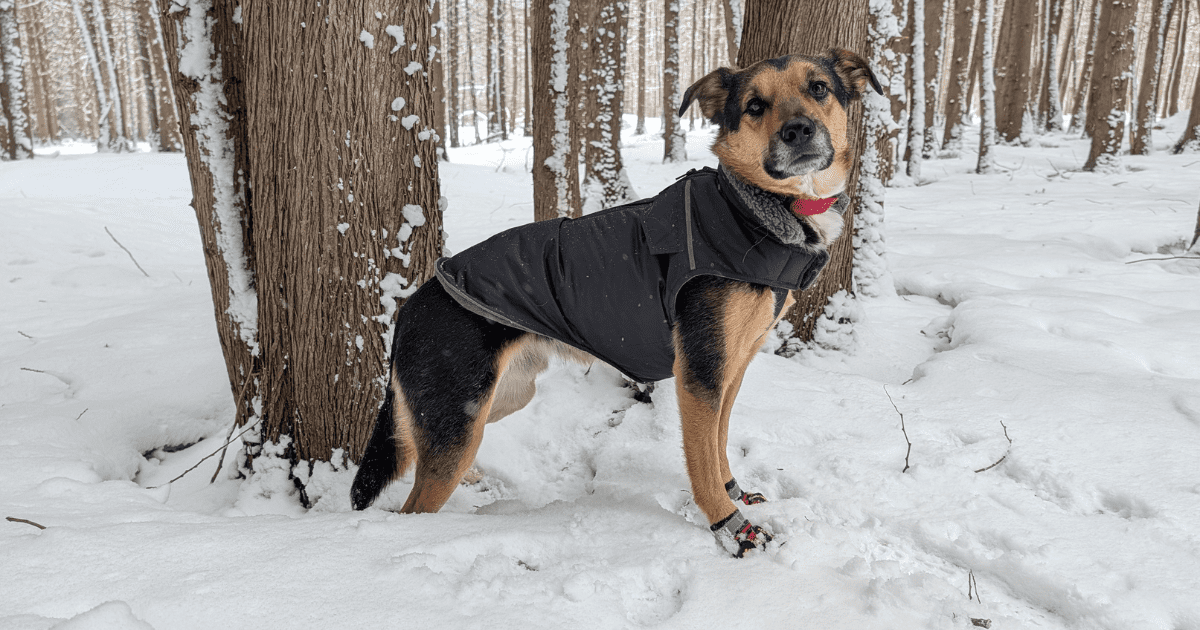
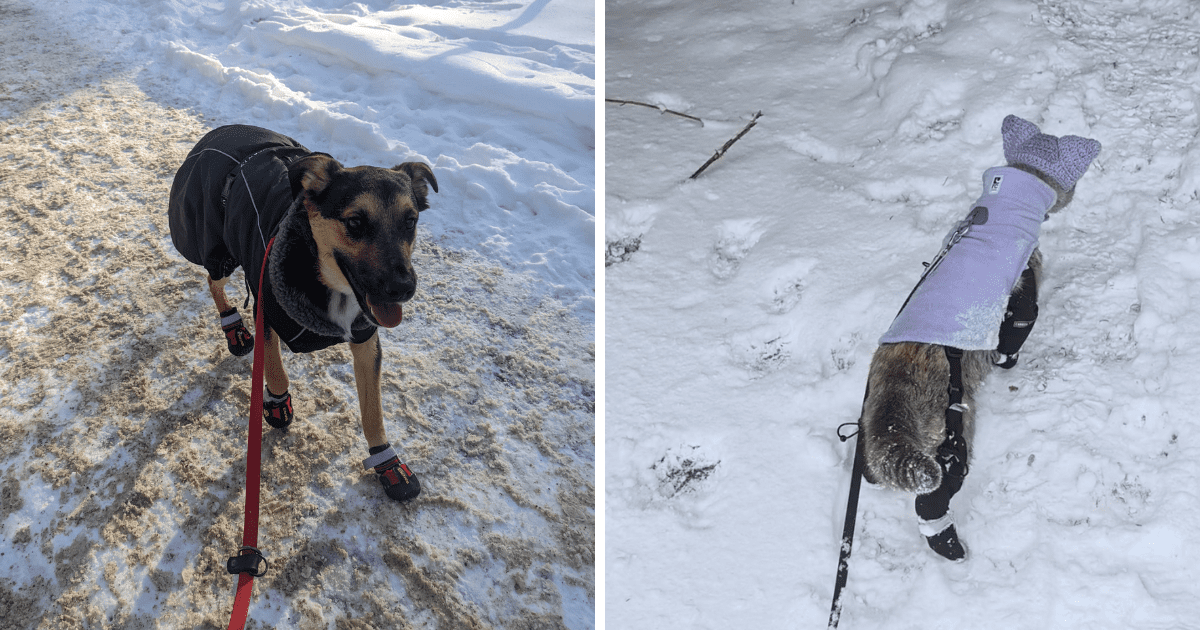
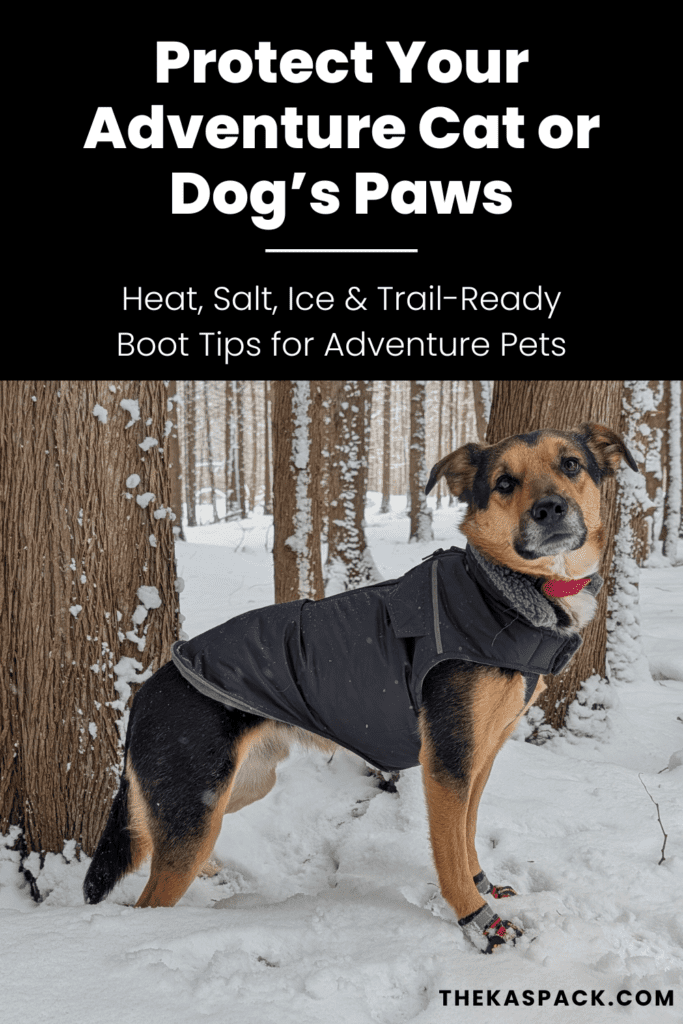
- Standard Boots: We rely on standard, rugged-sole boots when hiking on rough terrain. Lucifer currently uses a pair from QUMY, a brand we found on Amazon, while Willow has taken to an old pair of Neo-Paws. They provide traction and insulation, from frozen lakes to rocky trails.
- Suspender Boots: For Theia, we have recently started using suspender-style boots from Canada Pooch. They are a game-changer for pets who tend to lose traditional boots, ensuring their protection stays on even in deep snow or heavy brush.
- Summer & Water Boots: We use breathable summer boots from Neo-Paws that offer drainage and grip to protect pads from zebra mussels, where that is a concern. However, we are exploring new options for Lucifer.
- Balloon-Style Boots: While we don’t personally use these, we know many in our community find products like Pawz to be a great, lightweight option for pets who are particularly sensitive to the weight of a traditional hard-soled boot.
Waxes and Barriers
We rarely use this ourselves, but it is widely respected among outdoor lovers, so I had to mention it!
The most common brand I hear mentioned is Musher’s Secret.
It’s designed to create a breathable, wax-based barrier against salt and ice buildup, making it a solid choice for those concerns if your pet refuses to wear any kind of footwear.
First Aid Kit
Of course, you can do everything right, and accidents still happen. It’s inevitable.
Ensure you always have a dedicated pet first aid kit with you when you’re adventuring outdoors.
Paw-related supplies should include:
- Vet Wrap: Essential for securing bandages without sticking to fur.
- Antiseptic Wipes or Spray: To quickly clean a cut paw.
- Pet-Safe Paw Cream: To soothe dry, cracked pads after a day in the elements.
We also recommend keeping either a balloon-style boot or a sock that can then be wrapped with vet wrap to protect an injured paw from any further damage while you make your way back to the trailhead.
Post-Hike Inspection and Cleanup
The adventure doesn’t end when we get back to the trailhead or the cabin. A thorough post-hike inspection is our most important habit for long-term paw health.
Once we’re off the trail, we perform a full “nose-to-tail” check of our pets, checking for several potential risks, including:
- Carefully checking between every toe and under the dewclaws for trapped debris like pine needles, burrs, ice balls, or tiny pebbles. This is also a great time to check for ticks!
- Using lukewarm water, a damp cloth, or a pet grooming wipe to clean away any lingering mud, sand, or (most importantly) corrosive road salt.
- Looking for small nicks and cuts, “shaved” pads from ice crusts, or cracked skin that might need to be treated to ensure your pet recovers before the next outing.
We also consider nail trimming an essential part of paw protection.
Long nails can force your pet’s toes to splay unnaturally, changing the way they walk and increasing the risk of a cracked or torn nail.
Adventure Cats: Specific Considerations
Bringing a cat out into the Ontario backcountry adds a unique layer of concerns to paw protection and safety.
Unlike dogs, who often adjust quickly to the “clunky” feel of a standard hiking boot with enough positive reinforcement, cats are generally far more sensitive.
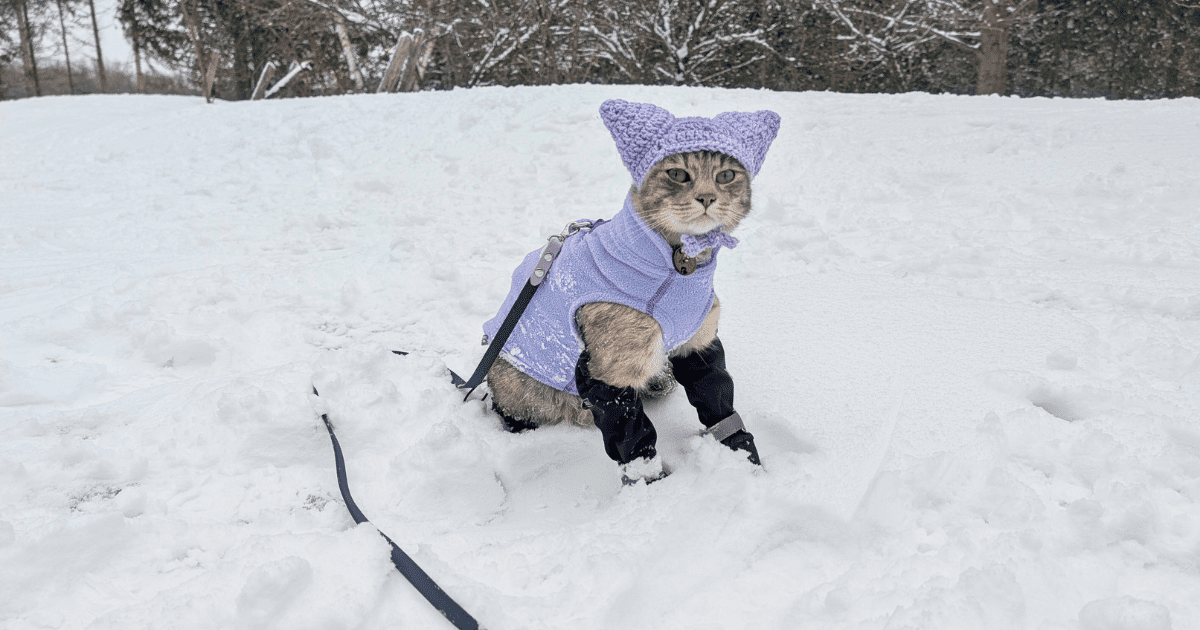
This isn’t to say it can’t be done. As you’ve already seen, Theia does have boots and wears them.
However, there are a few additional considerations when choosing the right gear.
Softer, more flexible materials in a boot are gentler on a cat’s sensitive paws, while allowing for natural claw retraction and extension.
Not only does this make them feel more comfortable with the boot, but it also helps them use their claws for balance and confidence when navigating uneven terrain.
Cats often require a longer “break-in” period with gear at home. Theia takes about twice as long to get used to new gear as Lucifer and Willow do.
Give yourself plenty of time for introduction and adjustment before expecting your feline adventure buddy to sport their new gear on the trails.
Keep Your Pet’s Paws Safe this Adventure Season
There is so much joy to be found in exploring outdoors with our best friend(s) by our side.
However, it’s even more enjoyable when you know that they are protected from the elements and any risk of injury.
There is no one-size-fits-all solution for paw protection; the “right” gear is the tool that best matches your pet’s unique needs and preferences.
Whether it’s a rugged winter boot for the deep snow or a specialized water shoe for a summer portage, the right gear is well worth the effort it takes to find and introduce it.
We obviously encourage you to get out there and discover the many beautiful locations this province has to offer.
But a little preplanning is key to keeping your pet’s comfort and safety at the forefront of every adventure.
Do your pets wear boots on their adventures? If so, what options do you find work best for you and why? I’d love to hear in the comments!
