Trail-Tested Hunting Season Safety Tips For Adventure-Loving Pets
As the cooler late-autumn air sets in, many of us gear up for hikes and adventures with our dogs and cats before our favourite trails are transformed into a winter wonderland.
However, this beautiful season also signals the start of hunting season.
The distant sound of gunfire or the presence of hunters (even in a familiar area) can cause panic, stress, distraction, or, worst of all, serious injury to our pets if we aren’t prepared.
Hunting season safety for dogs and cats, whether you’re on the trails or camping in the backcountry, requires more than just hoping for the best.
This guide covers the most important considerations, from selecting the right high-visibility gear to learning about local hunting zones, so you can continue to enjoy the great outdoors with your best friend.
This post contains affiliate links, which means if you click and buy, we will make a commission (at no cost to you). See our full disclosure policy for more details.
Know Before You Go: Local Hunting Schedules & Regulations
The simplest and yet most important step you can take to keep your pets safe is to be aware.
Hunting season safety begins long before you lace up your boots or clip on a leash; it starts with careful research into local land use and regulations.
Many outdoor incidents can be traced back to hikers and their pets accidentally wandering into an active hunting zone during game seasons.
Never assume that because a trail was open last month, it is safe today. Hunting schedules change annually, and regulations are highly localized.
Take the time to research the hunting regulations in your area, as well as how they apply to specific locations, such as national or provincial parks and conservation areas.
This information is largely available online through provincial wildlife agency websites, individual park or conservation area websites, and mapping apps like onX Hunt or HuntStand.
Keep in mind that these regulations may vary depending on what is being hunted.
Key information to familiarize yourself with includes:
- Seasonal Considerations: Different game seasons (like early archery for deer vs late shotgun seasons for fowl) introduce varying levels of risk. Know exactly what is in season when you plan to hike.
- No-Hunting Zones: When possible, search for and prioritize hiking in designated no-hunting areas. These often include:
- National Parks: Hunting is usually heavily restricted or prohibited.
- Many Provincial Parks: While some allow limited hunting, many highly trafficked parks prohibit it entirely.
- Designated Pet-Friendly Trails: These are often clearly marked as firearm-free for the safety of the pets that use them.
Never forget that rules are only as effective as those who choose to follow them.
Hiking in a no-hunting zone doesn’t guarantee safety, so always be aware of what is happening around you when you’re outdoors.
Even when hiking our own private property, we are aware that hunters may (intentionally or unintentionally) cross property lines and end up in the woods here.
Visibility is Non-Negotiable
As the seasons change, we’re dealing with the loss of daylight. This isn’t just inconvenient for outdoor adventurers; it can also contribute to trouble.
When visibility is low, a hunter’s split-second decision can mean the difference between a close call and a tragedy.
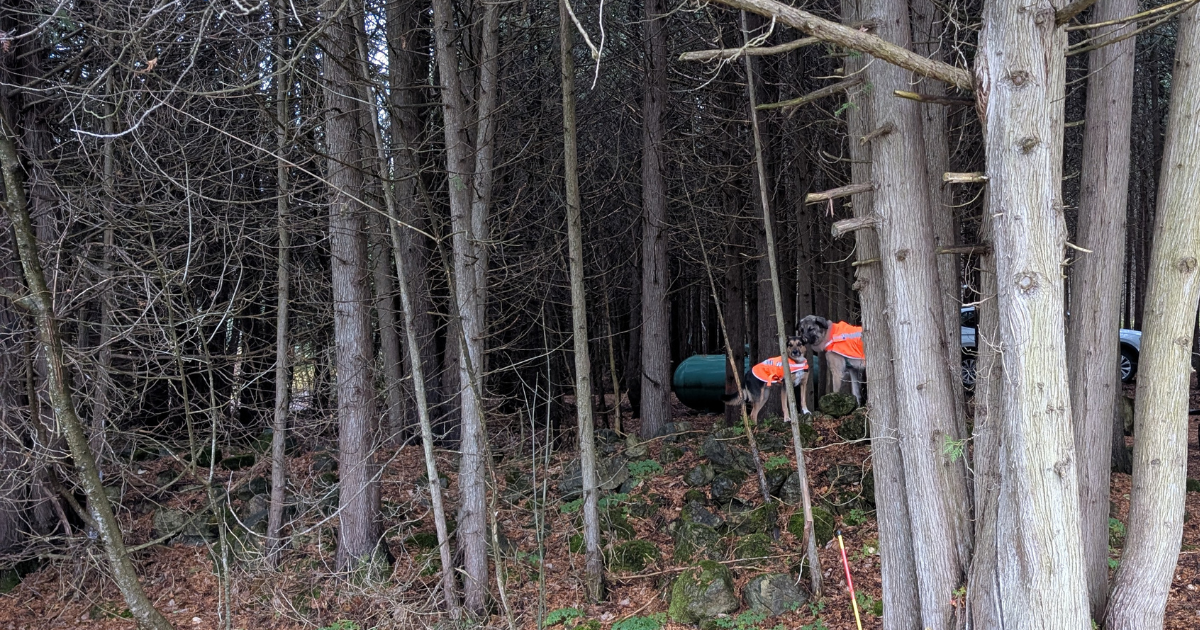
Ensuring both you and your pet stand out dramatically against the natural backdrop of your hiking trail is a top priority throughout hunting season.
The right gear can significantly reduce the chance of your dog or cat being mistaken for local wildlife.
The Power of Blaze Orange
Blaze orange is not just a trend or a suggestion.
It is considered the gold standard in hunting safety gear because it is scientifically proven to be visible to the human eye even in low light or dense brush, where other bright colours may fade.
Choose gear that is either entirely blaze orange or incorporates a combination of blaze orange and a bright safety neon.
For vests, look for materials that are durable, possibly water-resistant, and offer maximum coverage over the chest and back without restricting your pet’s natural movement.
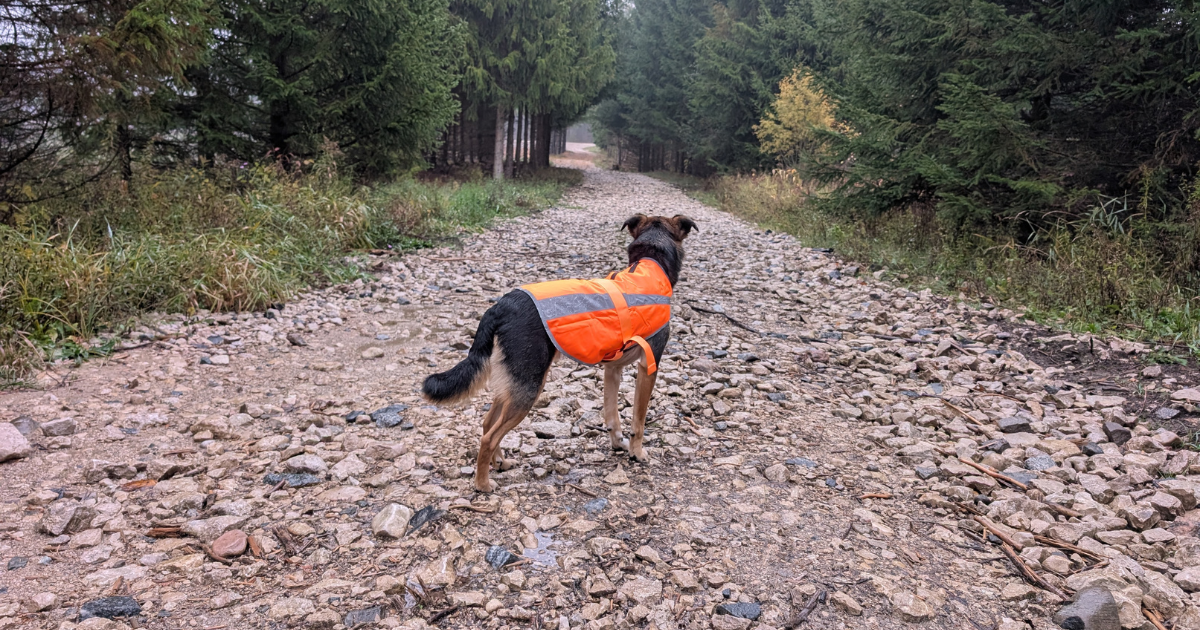
Choose a vest that has adjustable straps that will not slip off if it gets snagged on a branch or your dog chooses to roll in something (a guaranteed occurrence for our girl Willow on every outdoor adventure).
Many popular brands offer blaze orange coats or vests, like Ruffwear and Carhartt. Alternatively, harnesses like the Ruffwear Web Master can be purchased in blaze orange.
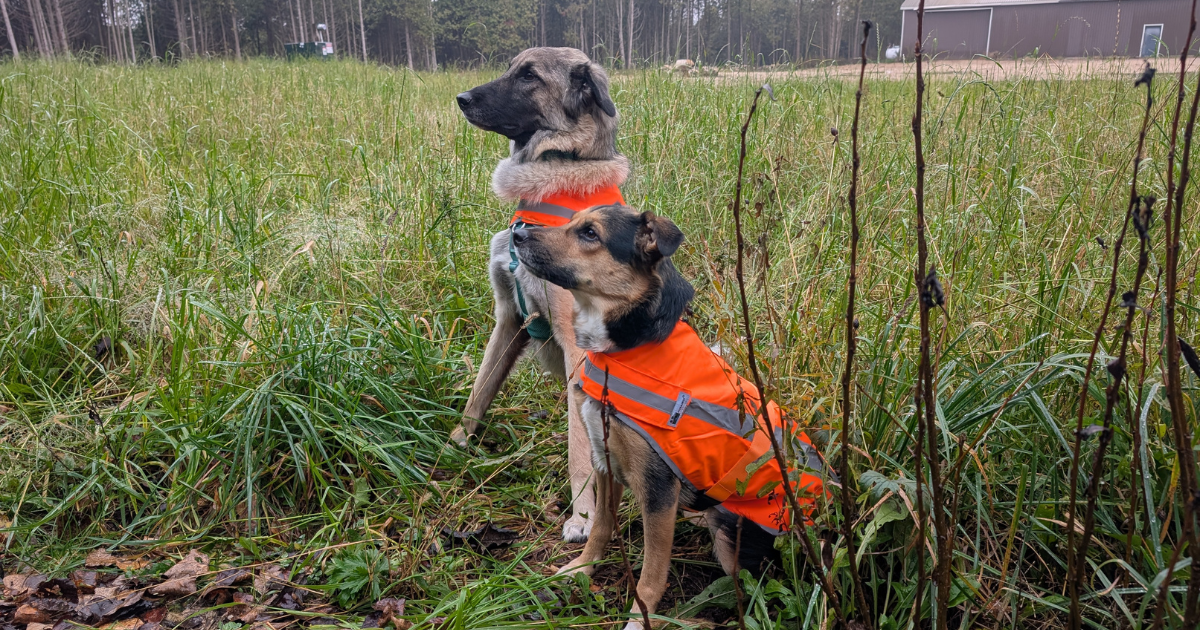
We are currently using the Reflective Dog Hunting Vest from the brand JIUSAIRUI, which is a budget-friendly option.
Reflective Gear for Low Light
While blaze orange works best in daylight, its effectiveness is limited if your adventures extend into dawn or dusk. This is where reflectivity comes in.
Reflective collars and leashes bounce light directly back to its source (like a flashlight or vehicle headlights), making your pet visible from a much greater distance.
Many safety vests will incorporate reflective elements, but you can always layer your safety gear for maximum protection.
A reflective collar paired with a blaze orange vest means your pet is visible by light reflection at night and colour during the day.
Alternatively, you could use a light-up collar. We have LED NiteHowel collars from Nite Ize for our pups, which we use both for nighttime safety when camping and during hunting season.
Gear for Adventure Cats
Many of the tips above apply to our outdoor-loving cats, but they also require a little specialized attention.
Cats are often smaller and less reliably recalled than dogs, so it’s worth taking a few extra steps.
Standard collars are notorious for slipping off or getting caught in underbrush. Choose a cat harness that is specifically designed for a snug fit that greatly reduces the risk of escape.
But never forget that there is no such thing as an “escape-proof” harness. Always supervise your cat just in case they manage to slip out.
Theia has three main harnesses we love for outdoor adventures:
- RC Pets Adventure Kitty Harness
- Travel Cat True Adventurer Harness
- Travel Cat Day Tripper H-Style Harness
I’ve also heard great things about the Cat School Vest Harness and the OutdoorBengal Houdini Harness, but I have no first-hand experience with either of them.
Because cats often stay low to the ground, consider attaching small, lightweight safety elements to their harness, such as a tiny LED light or reflective patches, to catch the eye.
Leash Control and Recall
Even the most reliably trained pet can become temporarily overwhelmed by the strong smell of something tempting, like a game animal, or the sudden, loud crack of a distant gunshot.
This is why leash control is not optional in high-risk areas during hunting season.
The excitement or stress of the environment can cause even excellent recall to fail. This doesn’t mean you have a bad dog (or cat); it just means that no one is perfect!
Additionally, many public lands have stricter leash rules during active hunting seasons to prevent possible issues with hunters or the risk of pets interfering with their ability to retrieve their game.
Regardless of what you use for the rest of the year, equip yourself with a sturdy, highly visible 4- to 6-foot leash in these spaces.
Never gamble on recall when firearms are in use. A leashed pet is a safe pet during hunting season.
Training for Hunting Season
If you’ve been around The Kas Pack for any length of time, you know I’m a firm believer in the responsibility of pet parents training their dogs for hiking safely.
Cats can also be trained to help keep them safe on the trails.
A couple of commands that can really help with the unique risks of hunting season include:
- Bombproof Recall: Even if you use a leash while visiting high-risk areas, there is always the risk that the equipment may fail. Practice your emergency recall repeatedly in increasingly distracting environments and situations. Reward your pet immediately and heavily each time they follow your commands.
- “Leave It” Command: This is crucial. Train your pet to ignore strong wildlife scents, animal remains, or anything else that may draw them off the path and potentially into a hunter’s line of sight or a hazardous area.
Protecting Against Wildlife Encounters
The potential risks associated with wildlife encounters aren’t unique to hunting season, but they are an important consideration!
Hunting can drive wildlife that would normally be hiding into more visible areas, like the trail.
A dog chasing a squirrel or deer may suddenly find itself face-to-face with a defensive predator, such as a coyote or bear, or more commonly, a wounded animal that is stressed and, therefore, unpredictable.
This is another reason proper leash control is so important.
Your dog’s leash will help you manage the distance between your pet and the animal in question, making it easier to smoothly retreat.
Navigating Safely
Smart trail navigation during hunting season involves making yourself as prominent and visible as possible while deliberately avoiding high-activity hunting areas.
By managing where you walk and when you walk, you significantly reduce the risk of an accident.
Trail Strategy
Sticking to established paths will keep you visible and predictable, two key factors for hunter safety.
Hunters are scanning open areas and recognized pathways. By staying on a well-defined trail, you are far more likely to be spotted and acknowledged.
Venturing off-trail through thick brush makes you much harder to identify until it’s too late.
Where possible, try to stick to official “No Hunting” zones.
If you are unsure, always err on the side of caution and assume hunting is permitted. It’s better to be safe than sorry.
Give a wide berth to any camouflaged structure or elevated stands you spot along the way.
While not specifically hunting-related, be aware of misplaced fencing, flagging tape, or signs of illegal trapping activity that may also occur in these areas.
Timing Your Adventures
Most serious hunting activity happens during the prime hours when game is most active: dawn and dusk.
Plan your hikes for the middle of the day, when visibility is highest and hunting activity is often at its lowest.
Weekends, especially the first few weeks of major big game seasons, see the highest hunter traffic statistically. Mid-week adventures are generally quieter.
Weather can also be a factor.
High wind or heavy rain can reduce hunting activity, but be cautious. These conditions can also reduce visibility and increase the risk of trouble for you and your pet(s).
Stay Safe this Hunting Season
With careful preparation, you can continue to enjoy the outdoors with your best friend even during peak hunting season.
Remember the key safety steps: know the schedule and hunting regulations, wear high-visibility gear, maintain strict leash control, and avoid peak timing.
A little caution now could make all the difference for you and your pet!

FAQs
How Do I Know if Hunting Is Allowed Where I’m Hiking?
Check with local location-specific organizations or agencies (Ontario Parks, Parks Canada, local conservation departments), both online and by calling their offices. Look out for posted signs at every trailhead and access point warning about hunting activity. These signs are generally the final word on current land use restrictions for that specific day or season. If unsure, proceed as if the area is an active hunting zone.
What Should I Do if My Pet Is Injured During a Hunting Season Hike?
Immediately stabilize your pet using the supplies from your pet first aid kit to control bleeding or immobilize an injury. While stabilizing them, have a partner search for the location of the nearest emergency veterinary clinic along your planned exit route so you can avoid any delays once you are moving. Additionally, having that person stand directly by you while wearing blaze orange safety gear will help reduce the risk that you are mistaken for game while moving about low to the ground during your first aid efforts.
Can Cats Safely Hike During Hunting Season?
Yes, adventure cats can safely hike, provided you take the necessary precautions. They require a secure harness that fits snuggly, and they should never be off-leash, especially in high-risk areas. For ultimate control and safety, having a carrier or backpack on hand can make it easier to secure them quickly to retreat safely if you encounter large wildlife or hunting activity.
What Are the Most Dangerous Hunting Seasons for Pets?
Big game seasons (like deer and elk) are typically the riskiest times. These seasons are more popular, attracting the highest level of hunting activity. They often involve the heavy use of firearms and involve strong ground scents that could draw your pet into trouble. Always use high-visibility gear during these peak times.
